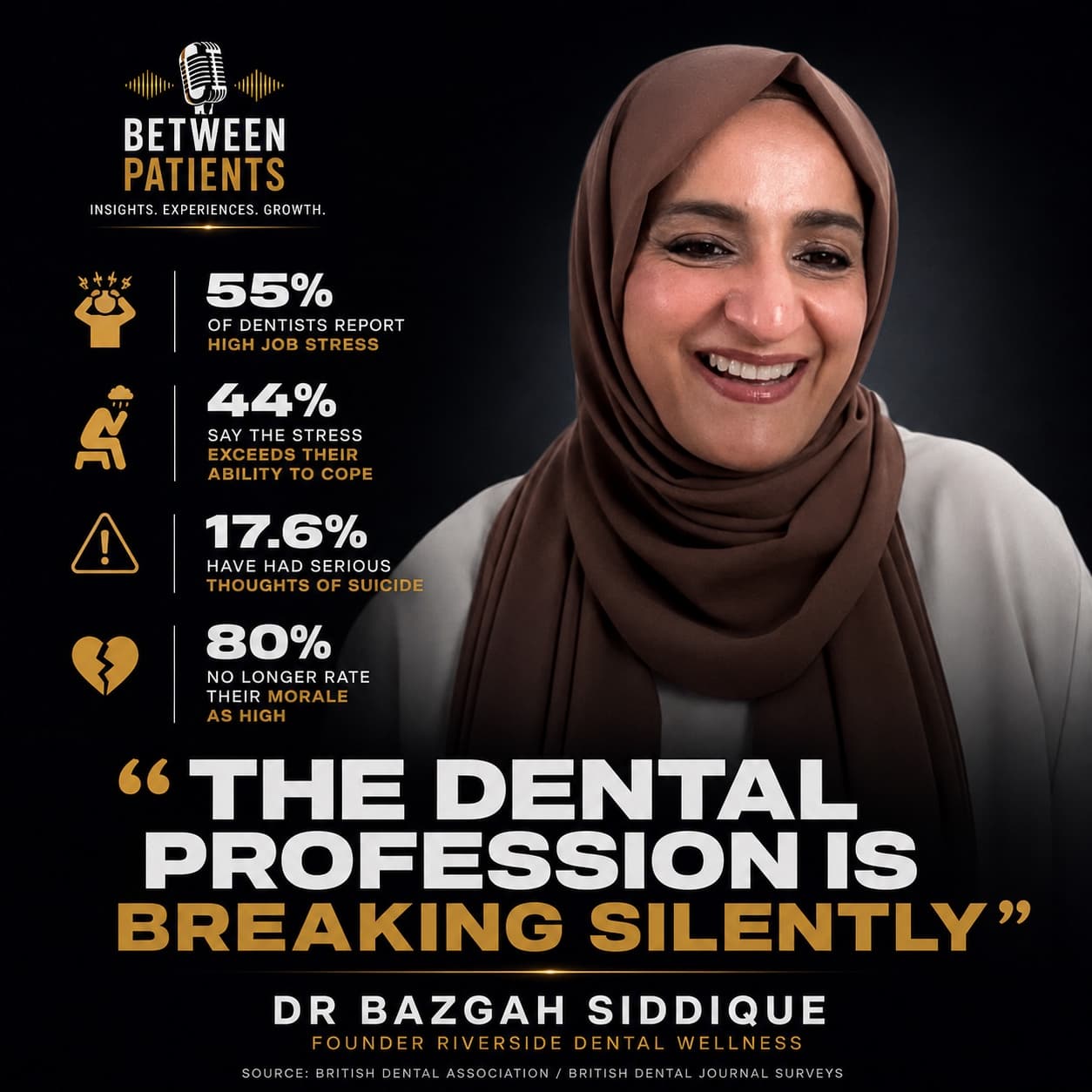

There is a line from this episode of Between Patients that lands harder the longer you sit with it. Dr Bazgah Siddique, founder of Riverside Dental Wellness, put the whole trap into one sentence:
We earn as long as we are hands-on. Dentistry is a golden handcuff.
It is a compliment and a warning at the same time. Golden, because the income is real and reliable. Handcuff, because it only exists while your hands are physically in a mouth.
Income you cannot step away from
Most dentists sell time by the hour, dressed up as treatment. The money is good, so the trap is comfortable, which is exactly what makes it a trap. Stop drilling and the income stops with you. Take a holiday and you do not earn. Fall ill and you do not earn. Try to slow down in your fifties and the number goes down in direct proportion.
Compare that to almost any other business owner. A shop owner earns while they sleep because the shop is open. A software founder earns while the product runs. A dentist earns while, and only while, they are personally at the chair. There is no leverage in the model. The practice may grow, but if every pound still traces back to the principal's own hands, the principal has not built a business. They have built a very well-paid job they can never put down.
The hidden cost of the cuff
This is where the golden handcuff meets the mental-health picture from the rest of the conversation. If your income is welded to your physical presence, rest starts to feel like loss. Every day off has a price tag. Every symptom of burnout competes with a mortgage. So dentists push through fatigue that any sensible employer would send home, because the alternative is watching the money stop.
That is not a discipline problem. It is a design problem. The structure rewards you for staying hands-on right up to the point of harm, and gives you nothing on the days you cannot.
Loosening the cuff
Bazgah's answer is not to abandon clinical work. It is to stop being the only source of value in the building. In practice that means the boring, unglamorous work of building something that earns without your hands: developing associates who deliver your standard of care, systems that run when you are not there, and revenue that is not one hundred per cent tied to your own diary.
None of that is quick, and none of it is taught in dental school. But it is the difference between a career you can eventually step back from and one that only ever pays while it is quietly wearing you out.
The first honest step is pricing the cuff. A day rate calculator for associates works out what one clinical hour actually earns you once gaps, failed appointments, re-dos and unpaid admin come out of it. It runs in the browser and shows every assumption on screen. The figure is usually lower than the split on your contract implies, which is the point.
This is the same problem The $2 Dentist was written to solve: brilliant clinicians who build broke, owner-dependent practices. You can get the book here.
Hear the full conversation with Dr Bazgah Siddique on the episode page, and if you have your own take on the economics of dentistry, apply to be a guest.

Host, Between Patients
Host of Between Patients and the fourth generation in a dental family. I sit down with private practice owners for the conversation we usually only have once the door is closed — no script, full editorial control, a real record of how they think, decide, and rebuild.