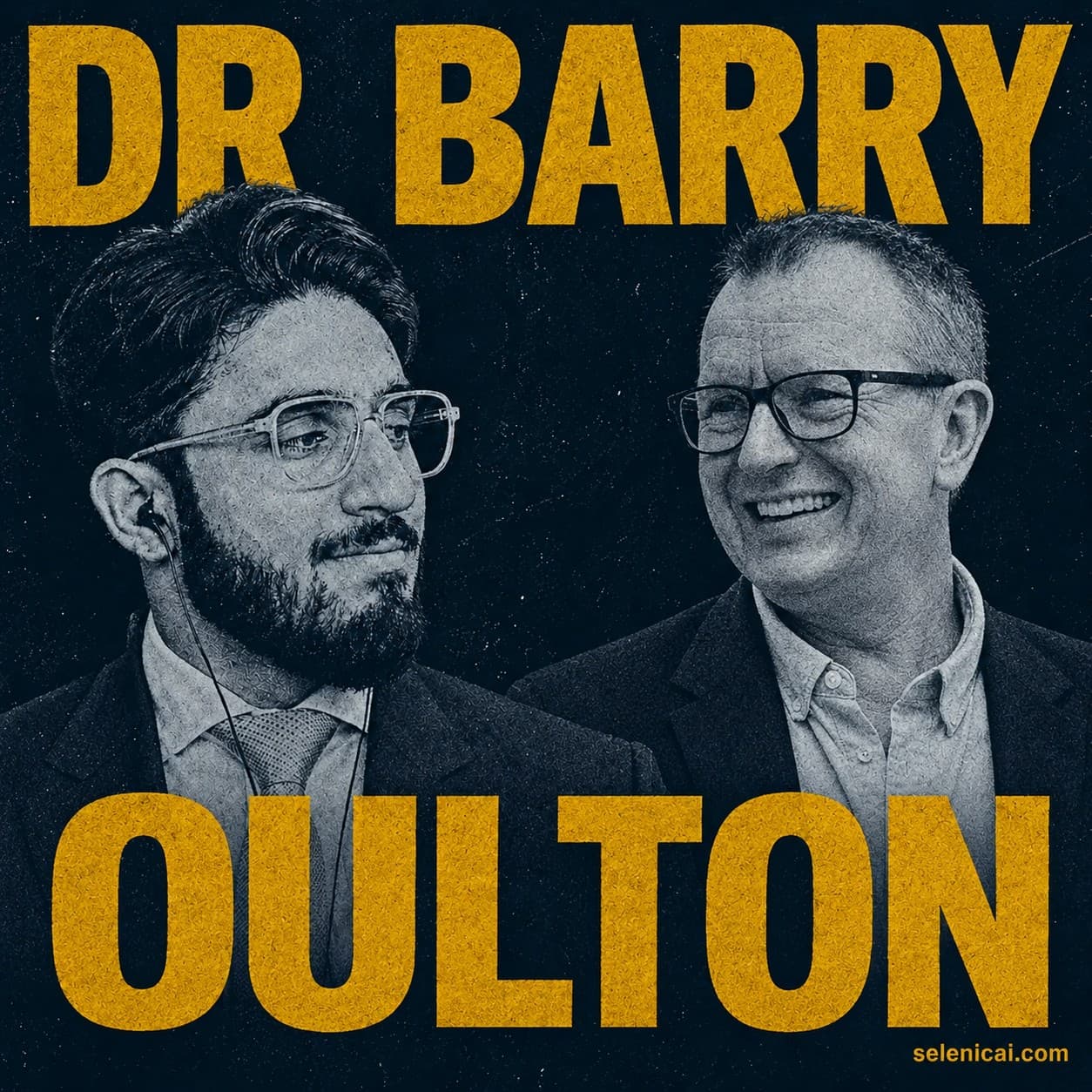

The £1,000 Rule: Zone Your Diary by Production, Not Collection
Dr Barry Oulton took a private practice in Surrey from £250,000 a year to just under £1.1 million. He did it on three and a half days a week in the chair, with no implants, no orthodontics, and not a penny spent on external marketing.
Before that, he was working six days a week. The diary was full. The practice was not making money.
My hardest days would have been a Wednesday, twelve hour day, and I'd gross about six hundred quid. And it just blew my mind because I'd worked tirelessly, three recall exams an hour, back to back, it was ridiculous.
The fix was not more hours or a higher hourly rate. It was changing what the diary was measuring.
Collection is not production
Most practices run the diary on collection, which is the money that lands on the day. Barry runs it on production, which is the clinical value created in that appointment.
Take an £800 crown across two appointments. The patient pays half on the prep and half on the fit, so collection reads £400 and £400. Production reads very differently.
When you start to run your diary based upon production, not collection, the first appointment, the preparation appointment, is worth £800. The second appointment, the fit appointment, is productivity is zero.
That is an uncomfortable number for most owners, because the fit appointment still takes a room, a nurse and a slot. Measured on production it earns nothing, which means it has no business sitting in your best hours.
The rule that protects the best hours
Barry zoned his diary into seven blocks. New patients, problem appointments, recall exams, and what he calls rock time, the hours where the real clinical work happens.
Nothing could go into the rock time that didn't have a production value of a thousand pounds or more.
A single crown prep plus its fit cannot clear that bar, so neither appointment goes anywhere near rock time. Three units can. That is the whole mechanism.
He also held a target of one and a half new patients a day and two problem appointments, which he deliberately does not call emergencies. Recall exams were capped, because they are what quietly destroy a well-liked dentist's income.
The most beloved dentists on the planet are the ones where their patients love them, they love their patients, they've been working in the practice for 10, 15, 20 years and they make no money. Because their diaries are rammed with all these beautiful, lovely patients that are coming back for recall exams.
Three crowns take ten minutes longer than one
The reason the rule works is that clinical time does not scale the way most dentists assume.
It would take me 40 minutes, start to finish, to see a patient, prepare for an indirect restoration, have them temporised and out the door. It would take me 50 minutes to do two and a composite.
Ten extra minutes for two extra units. The conversation is the same. The local anaesthetic is the same. The scans and the impressions are the same.
The only difference is the time that the diamond is on the tooth. And that is generally five minutes per tooth.
So a single-unit prep produces £800 in forty minutes. A three-unit prep produces £1,780 in fifty. Same room, same nurse, same patient, roughly the same effort.
How the third unit gets agreed
This is where most people skip a step. Barry is not upselling. He colour codes every treatment plan: red is immediate and diseased, amber is worth considering, green is elective.
If the lower left six is fractured it goes on the red plan. If the old amalgams in the five and the seven are likely to need work anyway, they go on amber, presented honestly: same injection, same appointment, better contact points, less time in the chair overall.
Sixty-eight percent of my patients said, that makes sense, Barry, let's do that.
The patient still knows exactly what they must do and what they only could do. Nobody is pushed. The production simply moves from one appointment to one conversation.
What this looks like in practice
Barry's best day became a Tuesday, nine till three, because he was picking his daughters up as a single father.
I'd be grossing three, four thousand pounds and seeing half a dozen patients, not 30-40 patients.
Thirty to forty patients a day is a diary that feels productive and is not. Six patients with the right work in the right slots is a diary that pays for a three day weekend.
The dentistry did not change. The measurement did.
Watch the full conversation with Dr Barry Oulton on the episode page, and if you want the longer argument about why brilliant clinicians build broke practices, that is what The $2 Dentist is about.

Host, Between Patients
Host of Between Patients and the fourth generation in a dental family. I sit down with private practice owners for the conversation we usually only have once the door is closed — no script, full editorial control, a real record of how they think, decide, and rebuild.